STORY 06 · CULTURE & MATERIAL · 5 MIN READ
When Coffee Became Perfume
A journey from Yemen’s terraces to cup and bottle
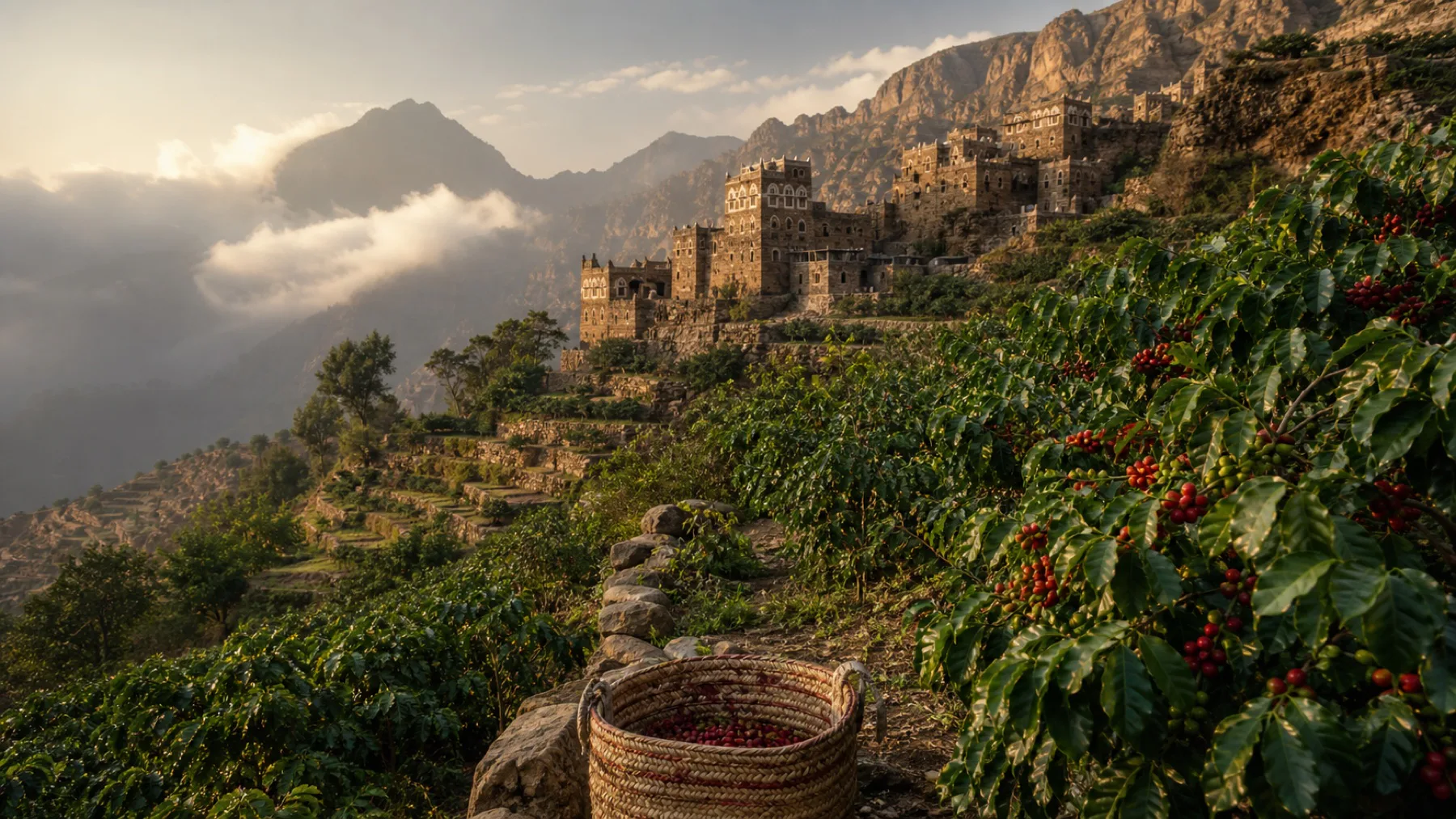
Before coffee was a sip, it was a scent: beans meeting fire, cardamom under the pestle, and a dallah opening the majlis. Before cafés called a drink “mocha,” Al-Makha was a Yemeni port on the Red Sea, carrying coffee’s story outward to the world.
From Africa to Yemen’s terraces
Wild Arabica is native to Africa, yet Yemen became a crucial early centre of its cultivation, domestication and trade. In dry highlands, farmers tended coffee on stone terraces that held soil and water. Genetic research traces much of the cultivated Arabica found around the world through this Yemeni passage.
Mocha: a city became a scent
The Yemeni port of Al-Makha sent coffee across the Red Sea until its name entered many languages. “Mocha” was not originally a recipe with chocolate, but an echo of a city and port tied to Yemeni coffee and its journey beyond Arabia.
The cup that orders the majlis
Across the Arabian Peninsula, coffee became a language of generosity and respect. The eldest or most honoured guest is served first; the dallah and finjan are handled through familiar etiquette; a guest gently shakes the cup when finished. At weddings and gatherings, coffee remains a quiet declaration of welcome.
Each home adjusts the balance: lighter or deeper roast, cardamom, saffron, clove, and sometimes rose water. Arabic coffee is therefore not one flavour, but a family of aromas shaped by country, household, and memory.
What fire makes inside the bean
Green beans do not carry the roasted aroma we recognise. Heat creates hundreds of volatile compounds; families such as furans and pyrazines contribute caramel, nutty, cocoa-like and roasted impressions. Origin, roasting degree and time all alter what the nose finally reads.
From cup to fragrance
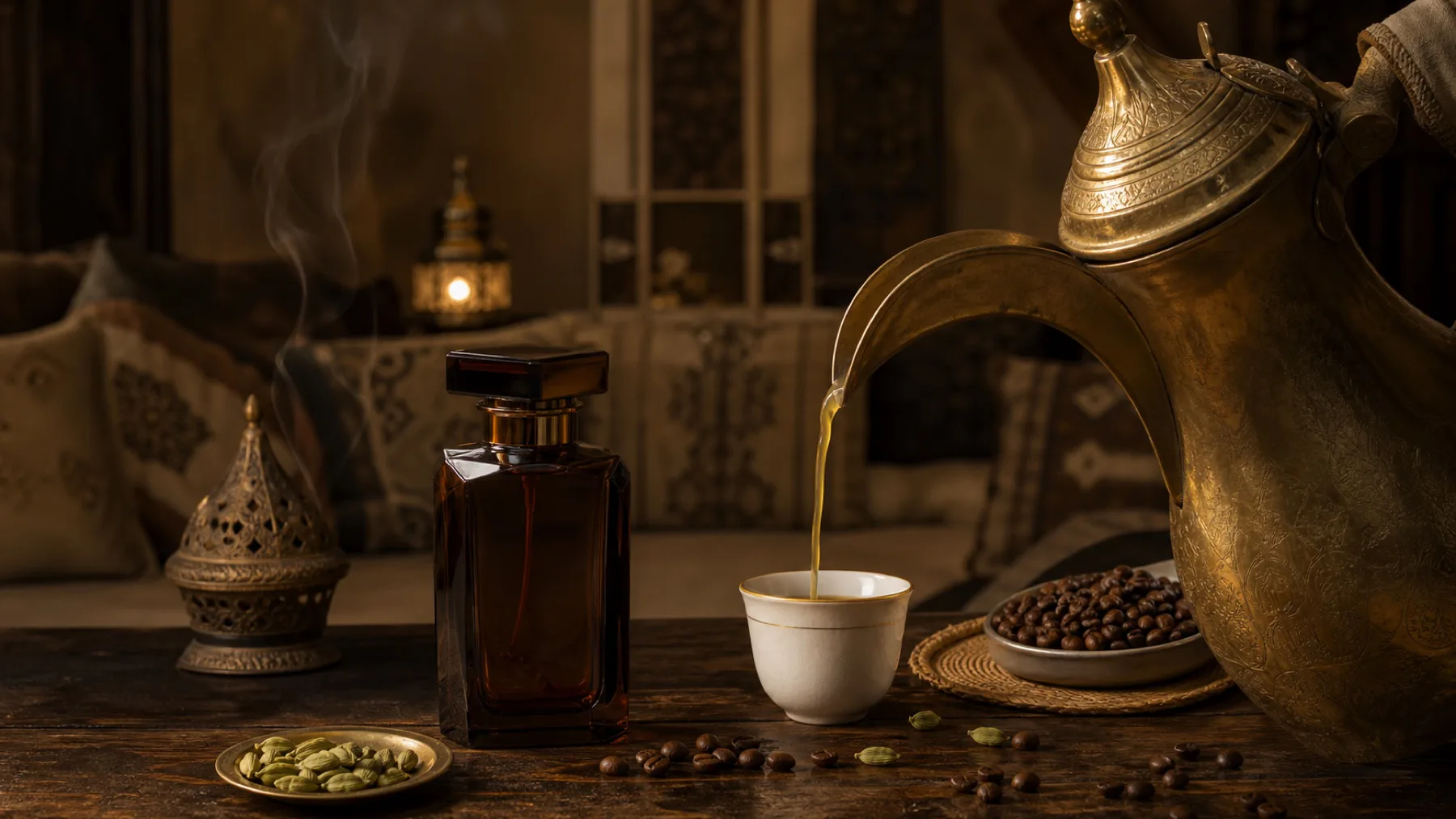
In perfume, coffee need not imitate a finished drink. It can lend a bitter roasted shadow, cocoa darkness, smoke, or a velvety depth. Perfumers may work with coffee extracts or assemble an accord from aromatic materials that reconstruct its different facets.
Vanilla sweetens it; amber adds warmth; oud or leather deepens it; cardamom brightens it and returns it to the memory of the dallah. This is why coffee appears so naturally in rich fragrances: it holds bitterness, warmth, smoke and sweetness in one space.
A scent before the sip
Coffee began as a crop, became a trade, then a social ritual, and now enters the perfume bottle. Yet the thread remains unbroken. In both majlis and fragrance, coffee reaches the nose first—carrying the fire of roasting and the sound of welcome together.