Story 02 · The Emirates · 4-minute read
When the Incense Burner Passes
From the merchants’ sails to the guest’s majlis and the bride’s chest
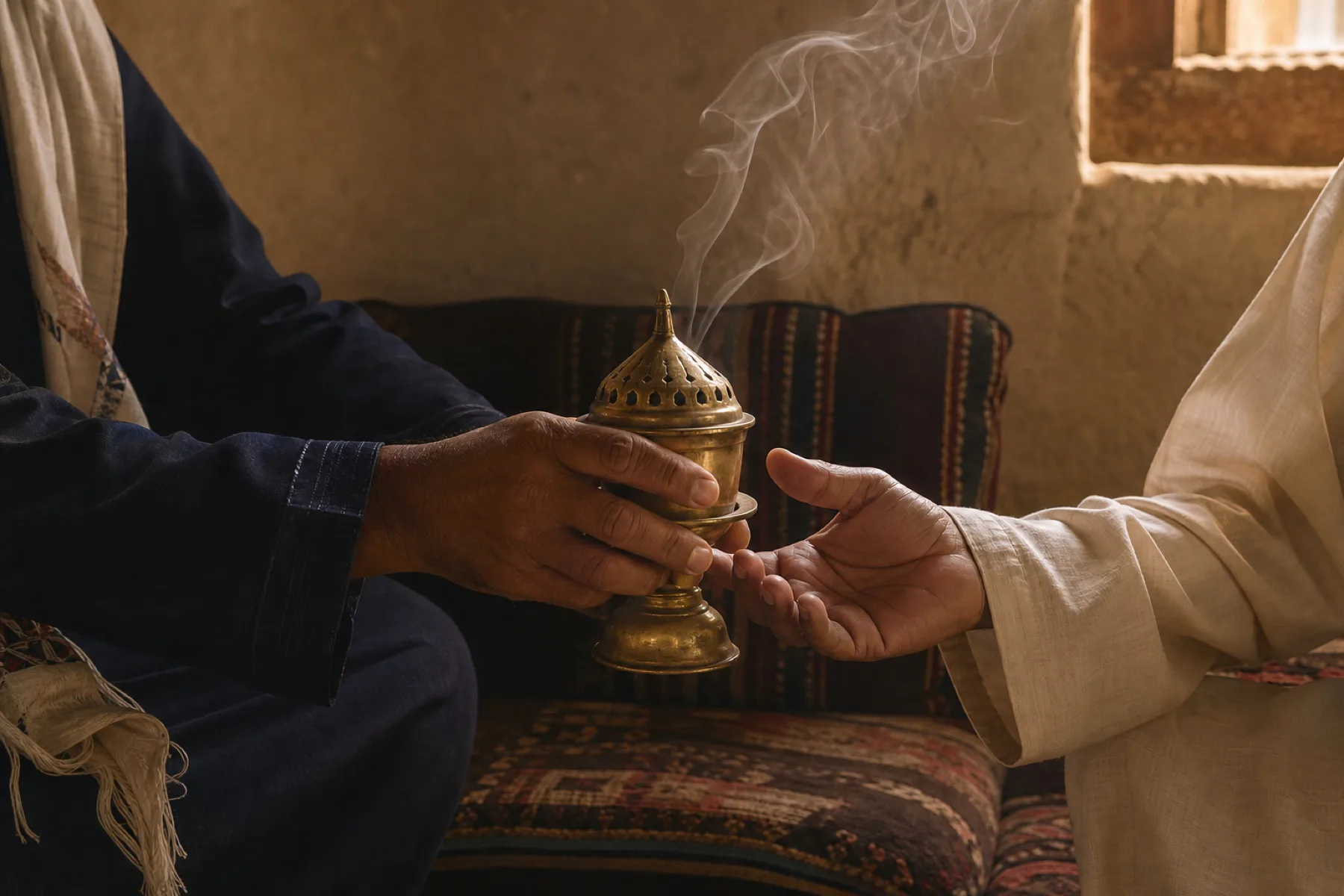
In the majlis, scent sometimes follows coffee. The incense burner moves from hand to hand; each guest draws a garment briefly through the smoke before passing it on. The gesture needs no explanation. The cloud of dukhoon says enough: you are welcome, and there is a place for you in this home.
Scent as Welcome
In the Emirates, fragrance is woven into the etiquette of the majlis, the visit, and the occasion. Oud or dukhoon perfumes rooms and clothing, beside Arabic coffee—recognized by UNESCO as a symbol of generosity in the UAE, Oman, Saudi Arabia, and Qatar. Sound, taste, and scent work together: cups, coffee, and rising smoke form one memory of hospitality.
Dukhoon is also a household craft. Dubai’s Perfume House describes blends of powdered wood, amber, musk, and perfume, shaped for later use on clothing or in rooms. Recipes differ between homes; a woman may guard her proportions as carefully as a family name or a dish that no one else prepares in quite the same way.
The Bride’s Perfumes
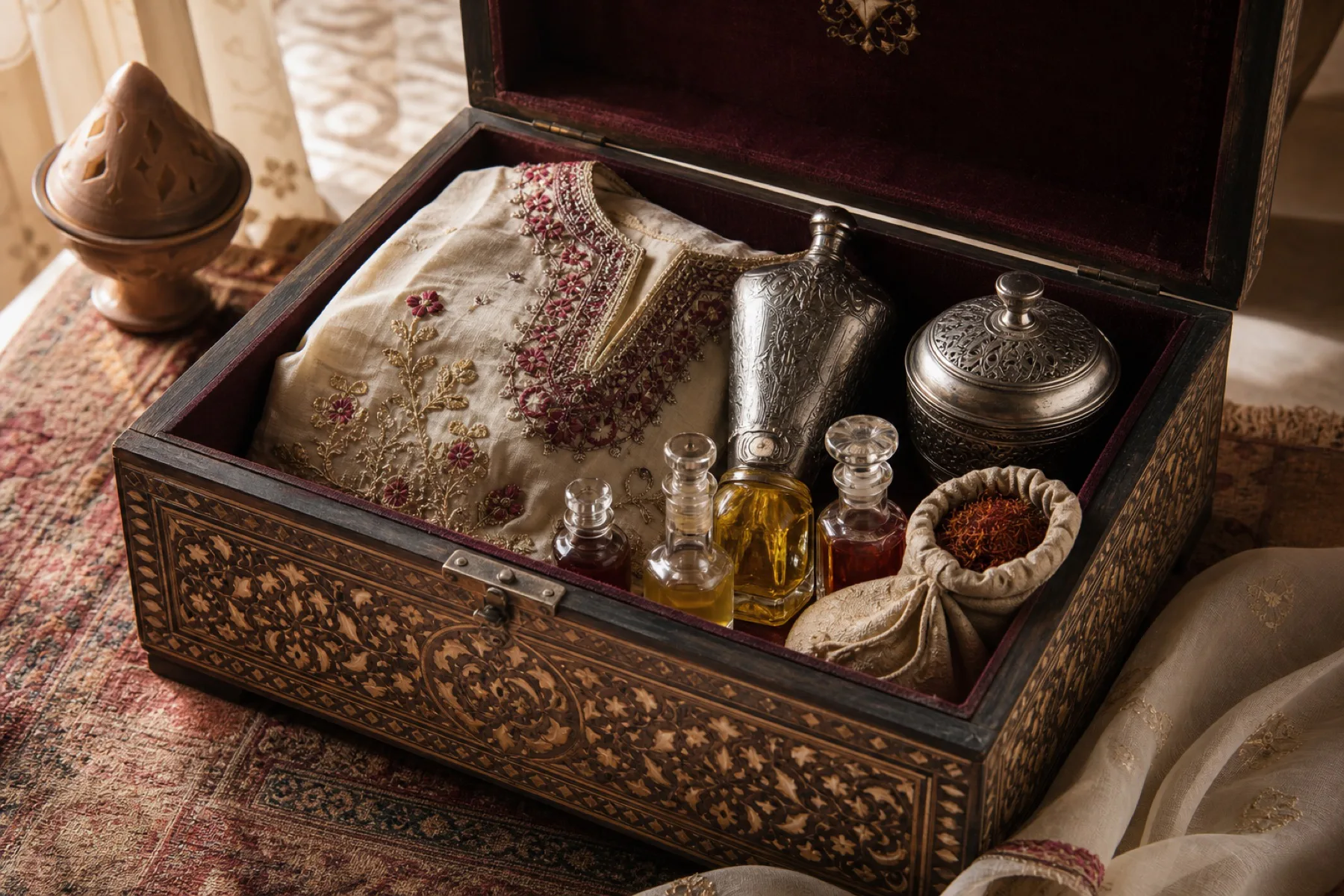
At weddings, fragrance moves from beautiful detail to essential preparation. Abu Dhabi’s heritage register describes the zuhba—the gold, clothing, perfumes, and household objects assembled for the bride. Its aromatic materials include oud oil, saffron oil, ambergris, sandalwood, rose oil, mukhammariya, dukhoon, and oud.
The bride’s scent was therefore not a final choice made after the dress was complete. It belonged to the story from the packing of the chests. Hair and garments were perfumed, leaving a trace after the procession ended—an invisible signature for a night meant to be remembered.
What the Sails Carried
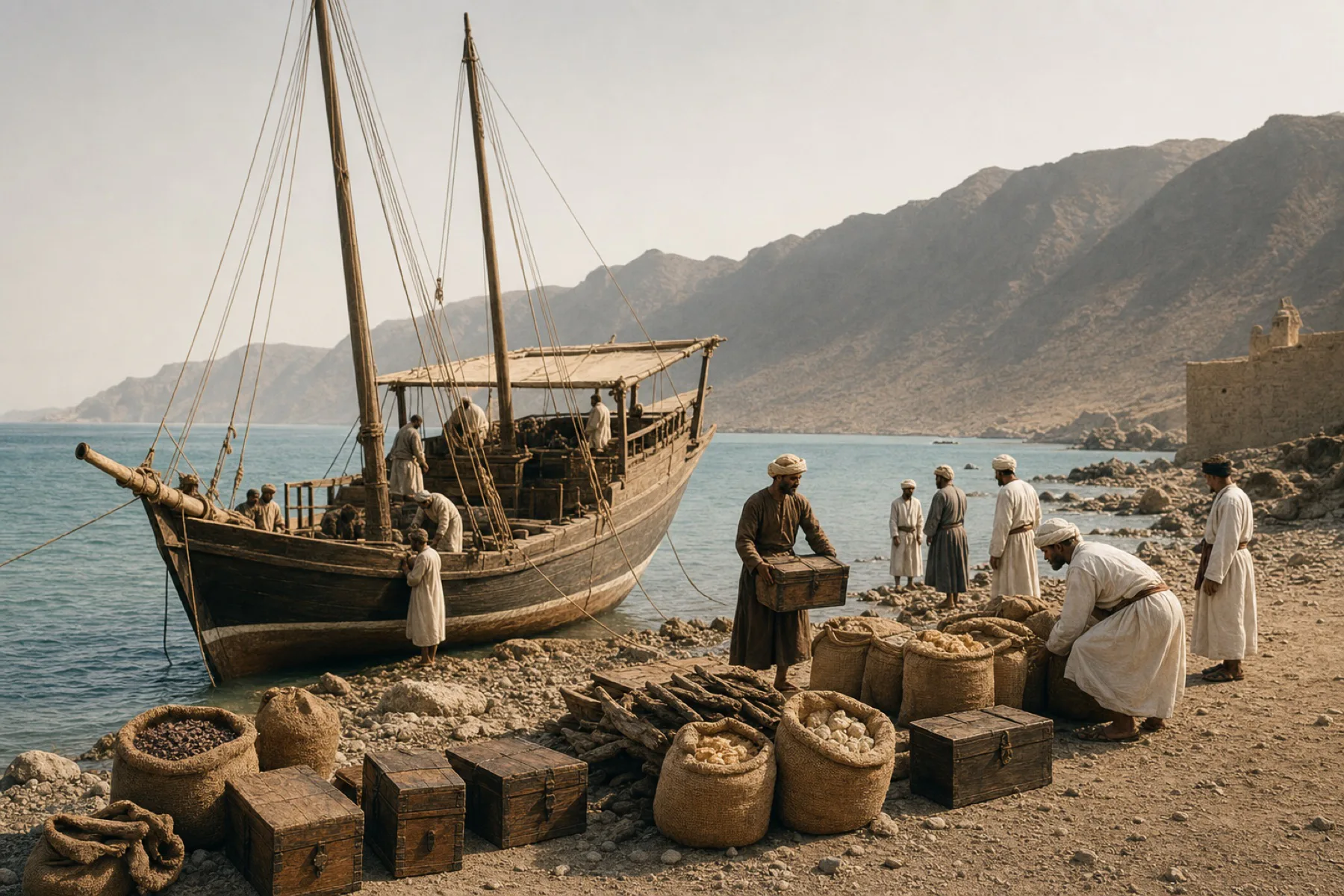
Before modern boutiques, many aromatic materials arrived by sea. Historic Julfar in Ras Al Khaimah belonged to Indian Ocean routes linking the peninsula with India, East Africa, and Southeast Asia. Later records mention large vessels from Ras Al Khaimah capable of reaching Mocha in Yemen. The Emirates’ connections to Oman, Dhofar, and Yemen were more than proximity on a map: they were human and maritime continuities through which tribes, sailors, goods, and scents moved.
Frankincense came from Dhofar into the region’s ports and markets; oud arrived from India and beyond; and goods, stories, and sailors passed through Yemeni ports. Merchants bought with eye, nose, and experience—judging the wood, its colour, and what its aroma revealed when it met the ember.
A Trace That Stays in the Cloth
Emirati perfumes now travel in modern bottles to distant cities, yet the older gesture remains legible: an incense burner passes, cloth catches the smoke, and a home announces generosity through scent. Trade changed and the industry expanded, but perfume retained its first task—to warm the moment, bring the place closer, and lengthen the life of memory.