Story 04 · Aromatic materials · 4-minute read
From the Kitchen to the Perfume Bottle
When spice and fruit carry their scent somewhere new
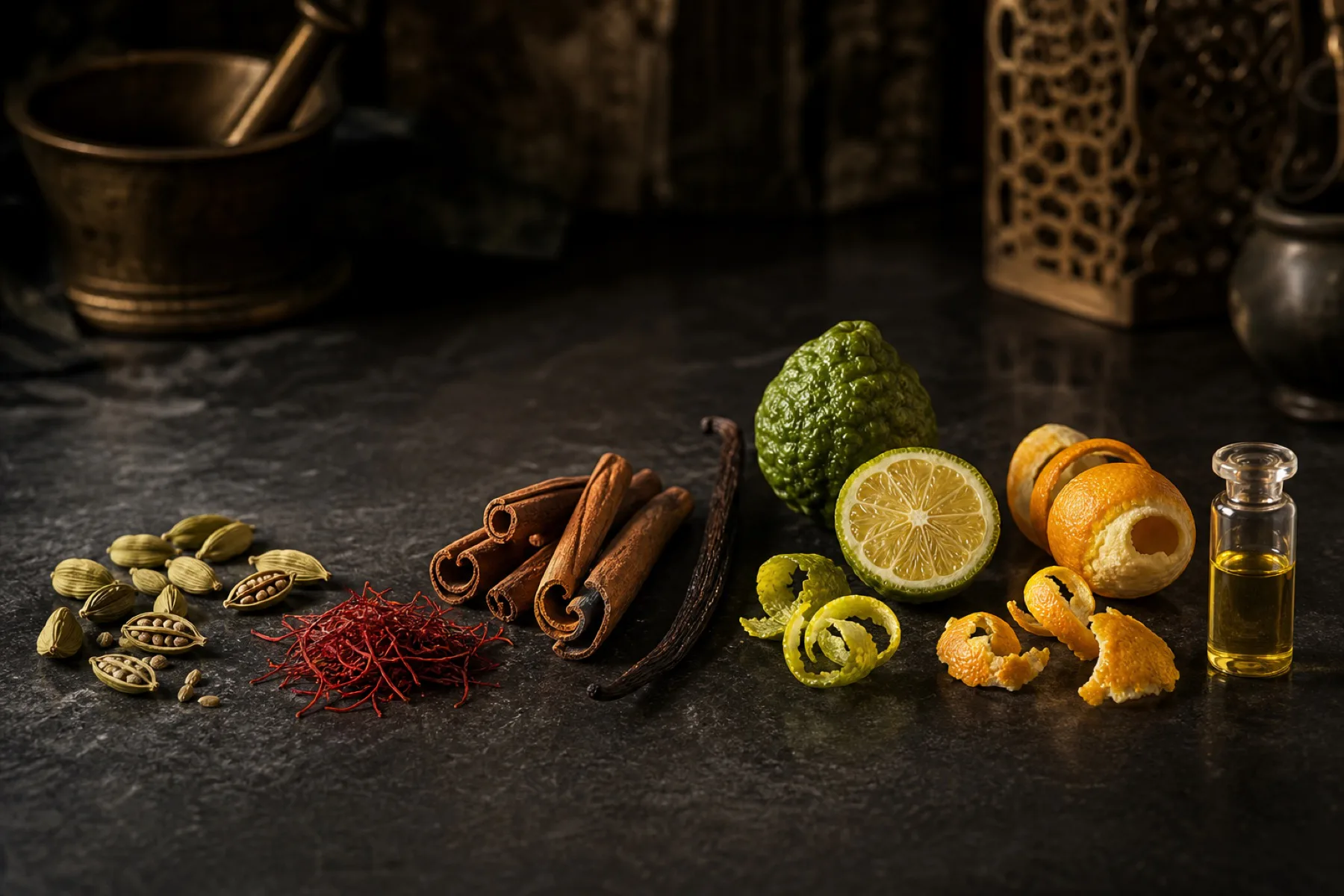
A cardamom pod opens above a coffee cup, releasing something cool and warm at once. A few steps away, a perfumer may place one drop of cardamom oil into a composition that will never be drunk. The material is the same; its role has changed—from flavour in the mouth to a spicy green light inside a fragrance.
Cardamom: Cup and Bottle
Cardamom seeds contain volatile oil that can be obtained through distillation. Its compounds create a fresh, spicy, slightly camphoraceous impression. Cardamom can therefore open a perfume as it opens the taste of coffee: a quick flash before woods, rose, or amber appear.
Saffron: A Small Thread, a Wide Shadow
Saffron is colour, taste, and scent. Safranal is considered its most important aroma compound, though studies identify a broader family of volatiles. In perfume, saffron gives dry warmth and may suggest hay, leather, or metal depending on the materials around it.
Orange Peel Hides the Oil
In citrus, the secret sits close to the surface. Tiny oil glands in the peel can be pressed or distilled to produce oils used in perfume and cosmetics. Limonene often dominates citrus-peel oils, but it works with other molecules to let the nose distinguish orange, lemon, bergamot, and lime.
One bitter-orange tree yields different materials: oil from peel, neroli from blossom, and petitgrain from leaves and twigs. Each part of the same tree has its own voice.
Why Not Squeeze an Apple for Perfume?
Not every fruit can be extracted into the smell we expect. Apples, strawberries, and cherries do not normally yield a commercial essential oil that smells like the fresh fruit. The perfumer instead builds a fruit accord from several molecules and materials, as a musician builds a melody from separate notes.
Perfumery does not copy the fruit; it recreates its effect. A peach inside a bottle may contain no drop of peach, yet succeed if it recalls the moment a ripe fruit is opened in summer.
A Table Smelled Before It Is Tasted
Cardamom, saffron, cinnamon, vanilla, and citrus stand at the border between kitchen and perfume. We eat them partly because they smell, and smell them through memories of taste. Some perfumes therefore seem delicious without being food: they borrow warmth from the table and carry it away to write a story on skin.